Nuclear engineering research and graduate mentorship at the
Royal Military College of Canada,
on the waterfront of Kingston, Ontario.
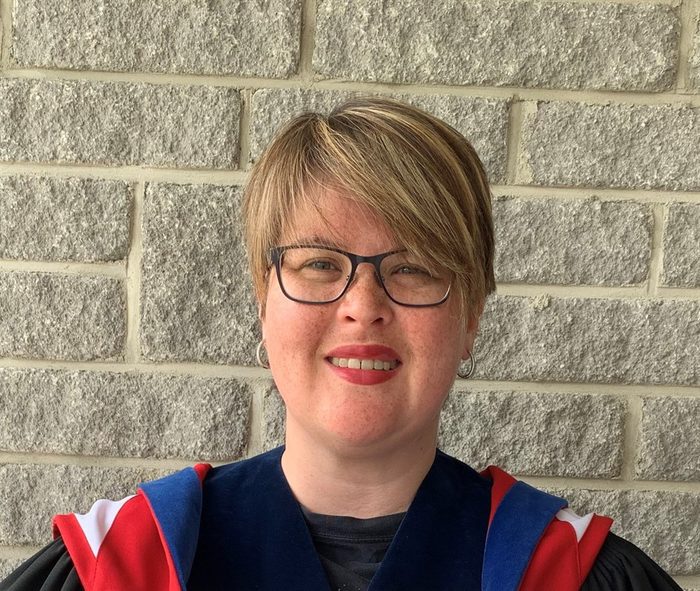
Dr. Emily Corcoran, P.Eng.
Professor, Chemistry and Chemical Engineering
I am a Professor of nuclear engineering at the Royal Military College of Canada (RMC), where I have taught and led research since 2008. I am a licensed Professional Engineer, the RMC Nuclear Program Co-ordinator, and a long-time supervisor with the SLOWPOKE-2 nuclear reactor facility, one of the few operating research reactors in Canada that students can actually work on.
If you are finishing your undergraduate degree and thinking about graduate school, here is what I believe: a graduate degree is not a checklist. It is a journey, and the researcher you become matters more than any single result. My students spend their degrees on questions that matter (i.e., who their work will help, what they are building, and why it counts), not lost in the weeds of deadlines and imposter syndrome.
I supervise the whole student, not just the thesis: communication, problem solving, and professionalism, built deliberately alongside first-class research.
That means regular one-on-one time, honest feedback on your writing and presentations, real conference experience, and connections into the Canadian nuclear community that follow you for the rest of your career. My graduates have gone on to the Canadian Armed Forces, Canadian Nuclear Laboratories, Ontario Power Generation, Los Alamos National Laboratory, the Canadian Nuclear Safety Commission, and faculty positions.
Technical depth gets you the degree. These three carry you through the career that follows, and we work on them from day one.
You will write papers that get published, give talks that get remembered, and learn to explain hard science to the people who fund it, regulate it, and depend on it.
Real research rarely goes to plan. You will learn to break down messy, open-ended problems, design the experiment or model that answers them, and recover when the first attempt fails.
Deadlines, ethics, teamwork, and delivering for partners such as the Canadian Armed Forces and national laboratories. You graduate knowing how to work, not just how to study.
Nuclear fuel thermochemistry, radiation detection, reactor science on the SLOWPOKE-2, dark matter, and dosimetry, with partners across Canada's nuclear community.
More than 50 peer-reviewed journal articles, from CANDU fuel modelling to the NEWS-G dark matter search, with links to every paper.
Volunteer, MASc, PhD, and postdoctoral pathways are open. One email starts the conversation.